Wednesday, June 13, 2012
Monday, May 28, 2012
Shravana Belagola
Had been to Shravana Belagola today.
Shravana Belagola is located in Hassan district of Karnataka.
The 57-feet tall monolithic statue of Gommateshvara is located on Vindyagiri Hill. We have to climb 600 odd steps to reach the statue. It is considered to be the world's largest monolithic stone statue.
The Mahamasthakabhisheka, the head anointing ceremony of the Lord Gommateshwara Sri Bahubali is observed once every 12 years.
Saturday, May 26, 2012
Friday, May 25, 2012
Life is What You Make it
A beautiful book by Preeti Shenoy.
Am sure one can finish reading it in one go like i did.
Its a story built around early 80's about Ankita Sharma, a regular college going girl from a middle class Indian family. All is well until her life takes a sudden U-turn when diagnosed with a mental illness.
Rest is how she fights back even the destiny.
Truly inspiring!
Tuesday, May 22, 2012
Thursday, October 6, 2011
Sunday, October 2, 2011
Golden temple
Golden Temple is situated in Amritsar, located in Northern Punjab, India, which is close to the border of Pakistan. It is the central gurdwara, or worship place, for all Sikhs in the world. Its proper name is Harmandir, which means "Temple of God". The gurdwara is constructed of white marble overlaid with gold leaf and stands in the center of a sarovar, or pool of fresh, clear, reflective water which is fed by the Ganges River. Pilgrims bathe and perform ablution in the sacred waters of the tank which is known for its healing properties. Langar is a free sanctified meal which is prepared daily and served at the temple.
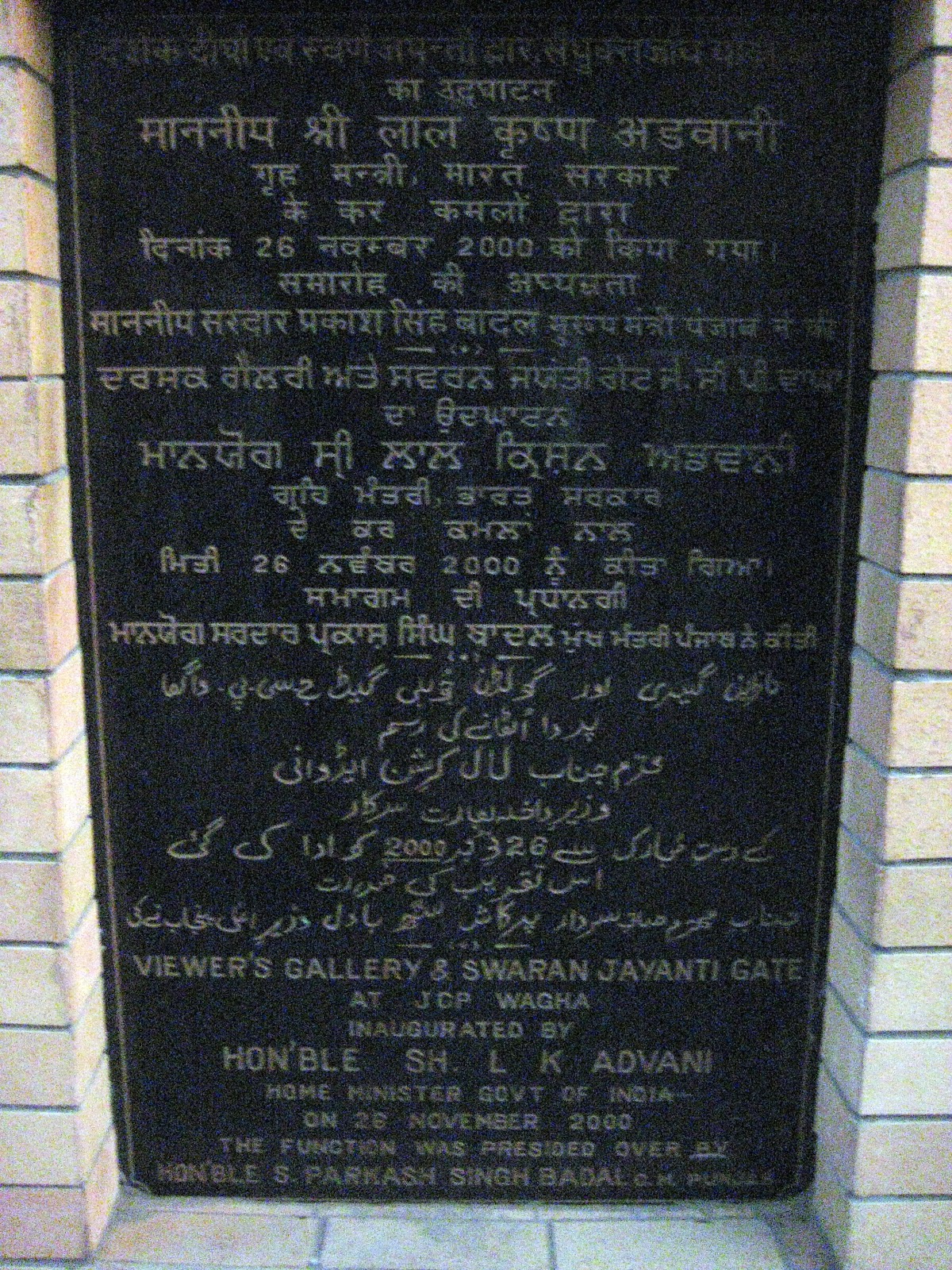
Wagah border
If you want to know how patriotic you are, visit Wagah border atleast once in life time and am sure every one out there would feel 'am proud to be an Indian'.
I have one more reason to cherish my visit. It also happens to be 2nd October, Gandhi Jayanthi.
One of the most unforgettable moments of my life.
Herewith am sharing few shots:
Saturday, October 1, 2011
Jallianwala Bagh
Being a student of History, I am always curious to go back to its roots, i mean history of any evnt, place, whatsoever.
Reading/studying about an event is different and feeling it live is a very realistic experience. This is what I felt after visiting Jallianwala Bagh.
Here is a brief history of the massacre:
The 1919 Amritsar massacre, known alternatively as the Jallianwala Bagh massacre after the Jallianwala Bagh (Garden) in the northern Indian city of Amritsar, was ordered by General R.E.H. Dyer. On Sunday April 13, 1919, which happened to be 'Baisakhi', one of Punjab's largest religious festivals, fifty British Indian Army soldiers, commanded by Brigadier-General Reginald Dyer, began shooting at an unarmed gathering of men, women, and children without warning. Dyer marched his fifty riflemen to a raised bank and ordered them to kneel and fire. Dyer ordered soldiers to reload their rifles several times and they were ordered to shoot to kill. Official British Raj sources estimated the fatalities at 379, and with 1,100 wounded. Civil Surgeon Dr Williams DeeMeddy indicated that there were 1,526 casualties. However, the casualty number quoted by the Indian National Congress was more than 1,500, with roughly 1,000 killed.
Monday, August 15, 2011
Subscribe to:
Posts (Atom)